Article
8 min read
When AI understands local language and context, developers build with confidence, relevance, and purpose.
Published on
Feb 17, 2026
Africa is poised to reap enormous rewards from AI. By 2030, it could add as much as $2.9 trillion to the continent’s economy (iAfrica, 2026). Yet today, AI systems mostly serve a small slice of Africa’s diversity. The continent has over 2,500 languages (Lanafrica, 2025), but most AI chatbots are trained on only approximately 100 languages (World Economic Forum, 2025). Nigeria, Africa’s largest economy with nearly 240 million people, exemplifies both the potential and the gap. By mid-2025, roughly 9.3% of Nigerian adults had adopted AI tools, and over 120 AI startups are active locally. GitHub reported a 45.6% jump in registered Nigerian developers to approximately 872,000 between late 2022 and 2023, indicating a fast growth in Nigeria’s tech talent (Tech Cabal, March 2024).
However, African AI still lags in investment and infrastructure. In 2024, global AI funding topped $100 billion, while Africa recorded only one notable AI deal under $100 million (OECD, 2025). There is also a notable improvement in local infrastructure, as Nigeria’s internet penetration is now about 50.6% as at late 2025), and nearly $1 billion is being invested in new data centres here. The nation’s cloud computing market is forecast to grow from $1.03 billion (2025) to $3.28 billion by 203 (CXOdigitalpulse, 2025).
These conditions underscore a central reality: Africa does not just need AI adoption; it needs AI infrastructure that is designed, built, and deployed with African contexts in mind. At Awarri, we are building the missing pieces for this African AI boom.
Awarri’s Role in Africa’s AI Ecosystem
Our work at Awarri is focused on building the foundational AI infrastructure that enables Africa’s next generation of technology companies. We develop frontier AI models, datasets, and APIs that allow enterprises, startups, and public-sector institutions to deploy AI systems aligned with African languages, data realities, and use cases.
Today, Awarri’s models are already being used by enterprises across multiple sectors, powering real-world applications and workflows. While many of these deployments remain confidential, they reflect a growing demand for AI systems that are locally relevant, scalable, and production-ready.
One example of this broader effort is N-ATLaS (Nigeria’s Atlas for Languages & AI at Scale), developed by Awarri in partnership with Nigeria’s government. As the country’s first open-source multilingual large language model, N-ATLaS demonstrates what becomes possible when national-scale language intelligence is made accessible to developers. Trained on indigenous Nigerian languages such as Yoruba, Hausa, Igbo, and Pidgin, it ensures that linguistic inclusion is built into AI systems from the ground up.
These efforts and innovations underscore our mission to enable the development and adoption of frontier technology that truly serves African users.
Sharing the Mission with Builders
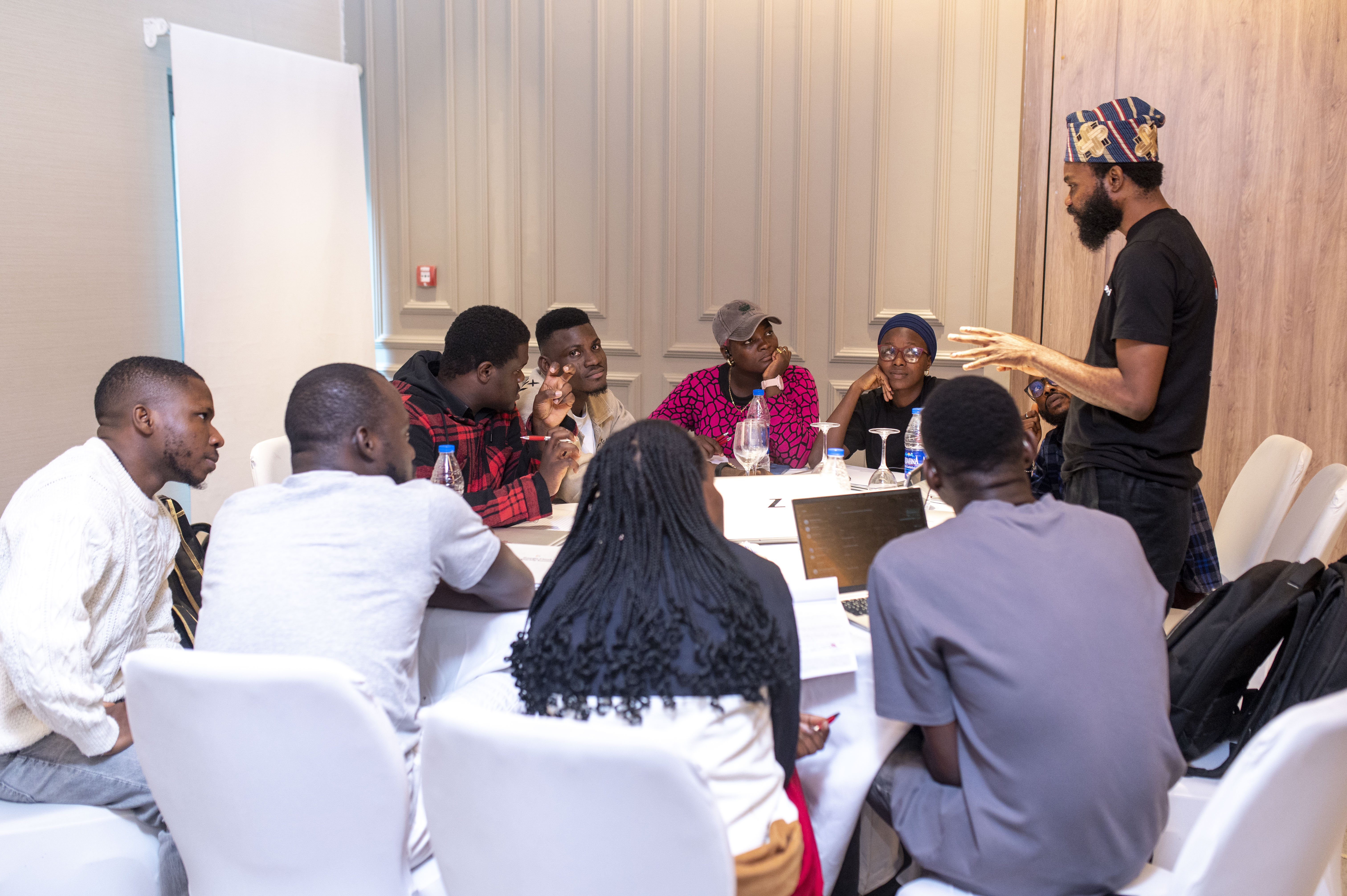
This commitment to building African AI alongside African builders directly informed the launch of the 2025 Awarri Developer Challenge. The challenge was designed to explore what African developers could build when equipped with culturally aligned AI infrastructure. We invited builders to create solutions for real people, solving real challenges, in real communities.
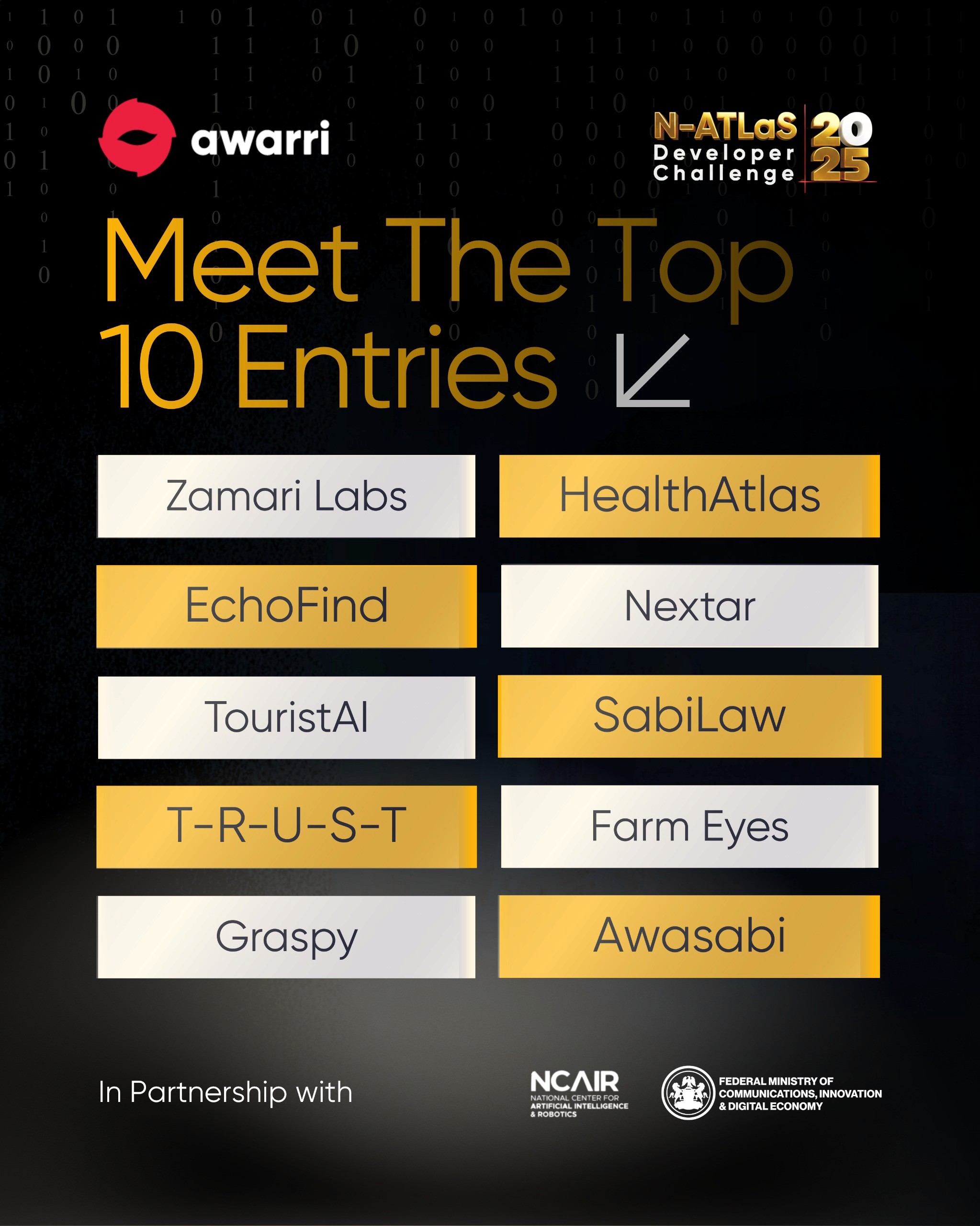
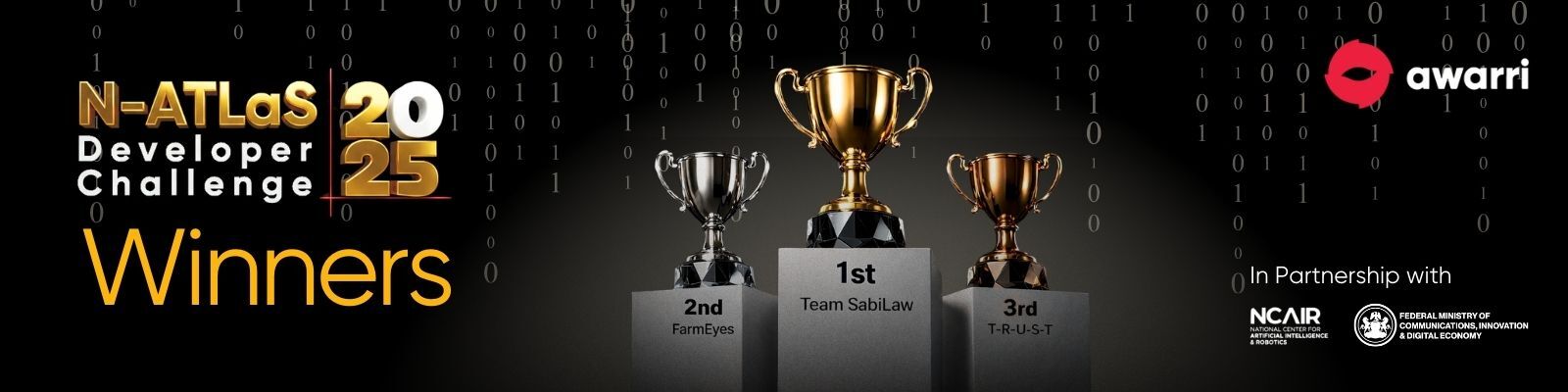
From about seventy (70) applications at the ideation stage, ten (10) projects advanced through a rigorous evaluation process, with three (3) selected as overall winners. Together, these projects offer a practical snapshot of Africa’s AI future: one shaped not by abstraction, but by everyday realities.
Innovation Across Critical Sectors
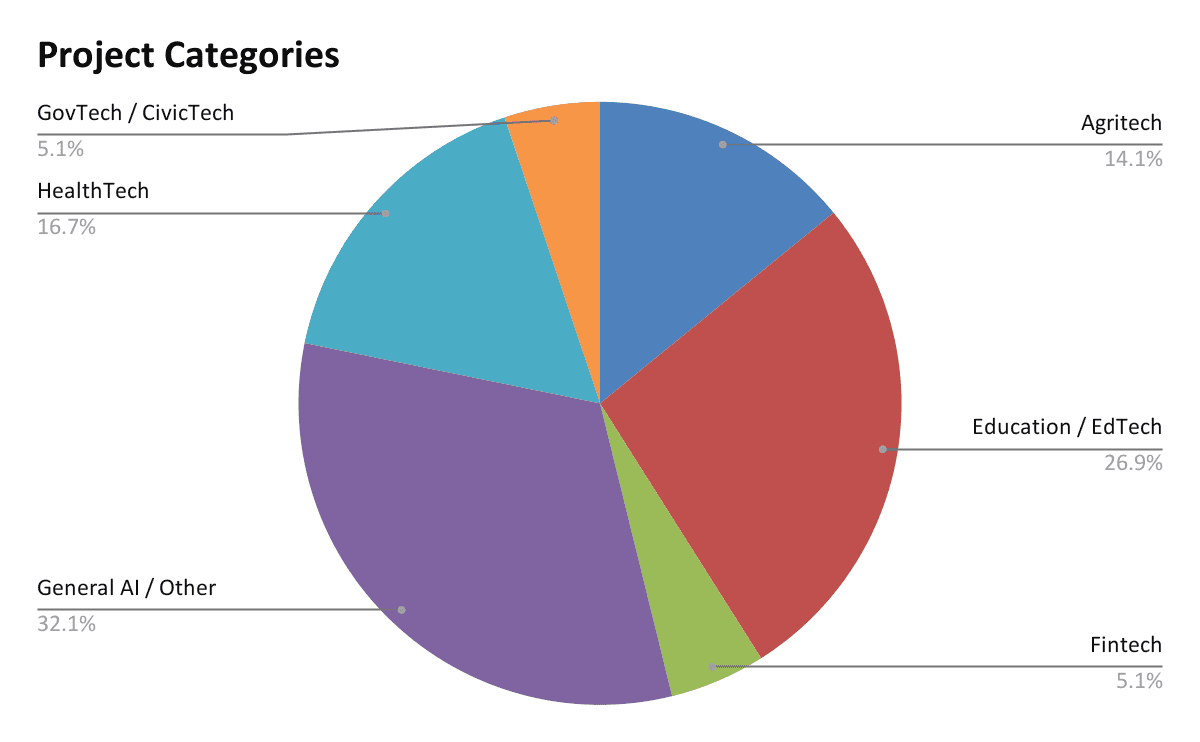
The top submissions spanned Nigeria’s most vital sectors. A unifying insight emerged: language is access. By using N‑ATLaS to break language barriers, each team unlocked services for millions of people. Examples include:
· Civic & Legal Tech: CivicAccess (Team SabiLaw) is a real-time AI “guardian” that interprets complex Nigerian laws (Constitution, Police Act, tenancy rules) into plain Hausa, Igbo, Yoruba and Pidgin. By translating “legalese” into community-friendly language, CivicAccess empowers citizens to understand their rights during police encounters, landlord disputes, or emergencies.
· Agriculture (AgriTech): FarmEyes helps smallholder farmers diagnose crop diseases and protect yields. Using mobile phone images and N‑ATLaS’s multilingual intelligence, FarmEyes identifies plant diseases, recommends treatments, and even estimates costs in Naira – all delivered in a farmer’s native language (via voice or text). This culturally aligned AI tool directly supports Nigeria’s food security and farmer livelihoods.
· Housing & PropTech: Lauya‑mi demystifies tenancy agreements. Users simply upload a lease document and ask questions in Hausa, Igbo, Yoruba or Pidgin. The AI instantly highlights any predatory clauses and explains tenants’ rights in clear language, preventing exploitation and reducing landlord–tenant conflicts.
· Health & Wellbeing: HealthAtlas is a multilingual health triage assistant. People can describe symptoms in English, Pidgin, Yoruba, Hausa or Igbo, and HealthAtlas uses clinical decision trees (powered by N‑ATLaS) to give safety-aware guidance. By offering early, reliable health information in local languages, it helps Nigerians in under-resourced areas seek timely care.
· Civic Engagement: n‑CiviSense reimagines public services. Instead of navigating complex portals, citizens can ask government-related questions in their preferred Nigerian language and get clear, verified guidance. This lowers barriers, reduces misinformation, and makes civic participation more inclusive.
· Education & Tutoring: Graspy is an AI-powered tutor that adapts to each learner’s language, level and context. Instead of one-size-fits-all curricula, Graspy continuously adjusts content based on a student’s performance and understanding – all in their mother tongue. This personalized approach aims to expand quality education to students wherever they are.
· Language Learning & Preservation: Awasabi tackles the erosion of indigenous languages. While many global apps focus on European or Asian languages, Awasabi is a multilingual learning platform for Nigerian local languages. By using AI to teach and preserve Yoruba, Igbo, Hausa and others, it ensures language heritage is carried forward into the digital age.
· Media & Content: EchoFind AI helps users extract knowledge from audio. Students, journalists or entrepreneurs can upload hours of recordings and get searchable transcripts and summaries. By turning unstructured spoken content into actionable text, EchoFind shows how African AI can accelerate learning and reporting.
· Consumer Tech: Dara brings AI into Nigerian homes as a multilingual smart assistant. Designed to understand Yoruba, Igbo, Hausa and Pidgin, Dara lets users control devices, play music or get information using their own languages. It demonstrates how everyday tech can be reimagined when voice assistants speak local tongues.
· Travel & Tourism: Naija-Tour Guide uses N‑ATLaS to offer voice-activated travel guidance. Tourists or locals planning a trip around Nigeria can ask questions in any Nigerian language and get itinerary suggestions, cultural insights and navigation tips. By making travel advice accessible in local languages, the platform enriches cultural storytelling and exploration.
These projects (and others in our Top 10) illustrate how African developers are solving problems across justice, health, food, education, civic life, and more, all by leveraging AI that understands the local context.
What the Challenge Revealed
Across all submissions, one insight was unmistakable: when AI understands local language and context, developers build with confidence, relevance, and purpose. The challenge freed teams to focus on innovation rather than tech adaptation, turning cultural understanding into a technical advantage. The solutions above are not just experiments; they are early signals of what’s possible when African innovators are equipped with African AI infrastructure.
Looking Ahead
Awarri remains committed to building a thriving technological ecosystem and supporting developers, with robust tools and APIs, and Awarri’s AI infrastructure, leveraging our frontier models such as Awa family of models or N-ATLaS, Nigeria’s first open-source, multilingual and multimodal LLM.
By building this ecosystem, we aim to drive inclusive growth across education, health, governance and more. Our mission is to make African AI infrastructures that speak our languages and serve our communities. We invite every developer, researcher and entrepreneur to join us on this journey. Together, we can build an AI future for Africans, by Africans, and turn these early breakthroughs into everyday reality.
See the winning entries
Learn about the winners, and the projects that made them stand out.
Join the Awarri Community
Connect with builders, researchers, and innovators shaping Africa’s AI future.
Join our Discord community.
Build With N-ATLaS
Explore the model, experiment, and bring your ideas to life.
Access N-ATLaS on Hugging Face